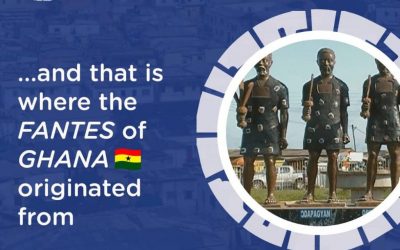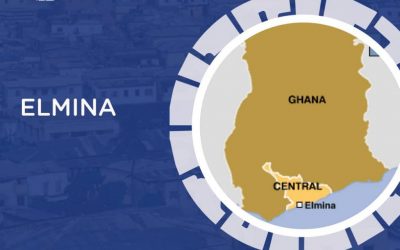
The Central Region was historically part of the Western Region until 1970 when it was carved out just before the 1970 Population Census. It occupies an area of 9,826 square kilometres or 4.1 per cent of Ghana’s land area, making it the third smallest in area after Greater Accra and Upper East. It shares common boundaries with Western Region on the west, Ashanti and Eastern Regions on the north, and Greater Accra Region on the east. On the south is the 168-kilometre length Atlantic Ocean (Gulf of Guinea) coastline. The region was the first area in the country to make contact with the Europeans. Its capital, Cape Coast, was also the *capital of the Gold Coast until 1877*, when the capital was moved to Accra. It was in the *Cape Coast Castle* that the historic *Bond of 1844* was signed between the British and the *Fante Confederation*.
In all, there are about 32 major festivals in the region. Notable among these are the *Aboakyer* at Winneba, *Fetu* at Cape Coast and *Bakatue* at Elmina.
The region has two Universities – *University of Cape Coast* and the *University of Education, Winneba*. The Cape Coast Municipality has excellent educational institutions like Mfantsipim School, St. Augustine’s College, Wesley Girls High School, Adisadel College and Holy Child that have produced some of the prominent citizens in the country.
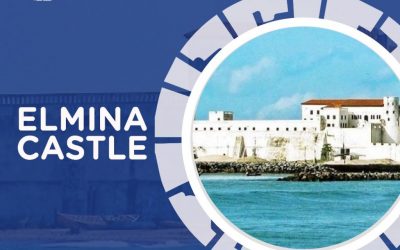
The strategic location of Cape Coast having a sheltered beach in proximity to *Elmina Castle* made it a great attraction to the European nations. Hence, for nearly a century, there was a ding-dong competition among the Portuguese, Dutch, Danes, Swedes and English to gain control of Cape Coast.
The Portuguese built the first trade lodge in 1555 and called the local settlement *”Cabo Corso”* meaning short cape, later corrupted to Cape Coast. The Swedes, led by Krusenstjerna, built a permanent fort in 1653 and called it Carolus burg after King Charles X of Sweden. During the next 11 years, the Danes, the local Fetu chief and the Dutch each in turn captured and held Carolusburg for a time. Finally, the English fleet led by Captain Holmes took Carolusburg. The fort remained in English hands till the late 19th century serving as the *West African headquarters seat of the president of the Committee of Merchants* and later as the seat of the British governor.
#DiscoverCentralRegion
#YearOfReturn